Before You Watch, Read This American Football Breakdown
American football is a strategic team sport built around territorial progress, timed possessions, and four-down decision-making, most prominently represented by the National Football League (NFL) in t...

Before You Watch, Read This American Football Breakdown
American football is a strategic team sport built around territorial progress, timed possessions, and four-down decision-making, most prominently represented by the National Football League (NFL) in the United States. Two teams of 11 players compete on a 100-yard field, attempting to advance the ball into the opponent’s end zone for a touchdown worth six points, while the National Collegiate Athletic Association (NCAA) governs major college competition under related but distinct rules. A standard NFL game has four 15-minute quarters, although stoppages make the real viewing experience considerably longer. The sport combines blocking, passing, rushing, field position, and clock management into a contest where one decision can overturn an entire afternoon. Listen up — this is the part that matters: learn downs, personnel, and scoring first, then use Football Compass analysis to assess tactics rather than judging a team by headlines alone.
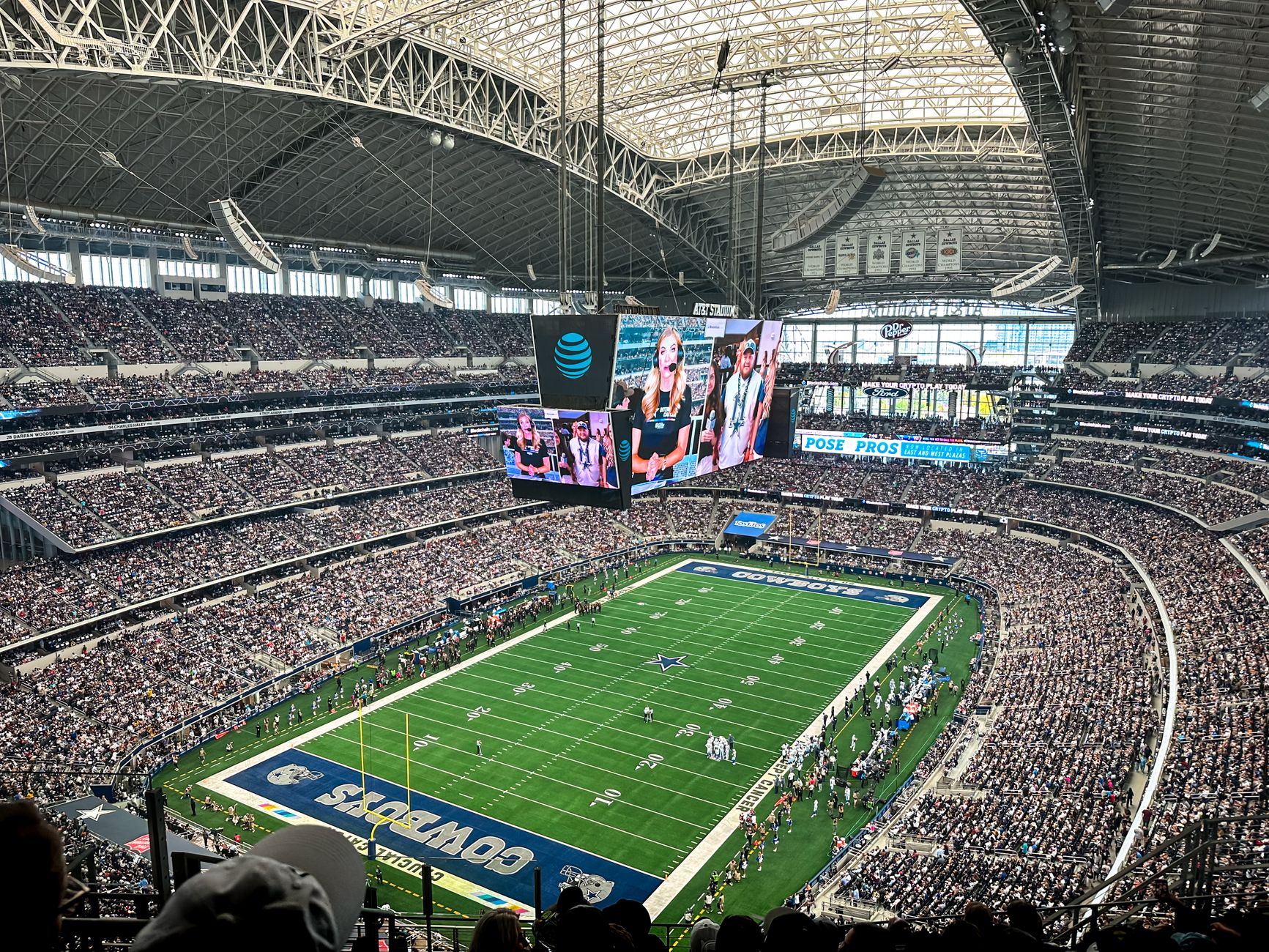
Photo by Terrance Barksdale on Pexels
Step 1: Understand the field, downs, and objective
American football is won by advancing the ball at least 10 yards within four downs, after which the offense receives a new set of four attempts. The field measures 100 yards between goal lines, with 10-yard end zones at either end, and hash marks help determine where each play begins. This structure makes every snap a compact tactical negotiation: the offense seeks space, while the defense tries to create lost yardage, turnovers, or a fourth-down decision.
The offense may run with the ball, throw one forward pass from behind the line of scrimmage, or use backward and lateral passes. If the offense reaches the line to gain, it earns a first down; if it fails after four downs, possession changes. A punt usually trades the ball for better defensive field position, while a field-goal attempt usually produces three points. The apparent simplicity is deceptive. A team leading 24–20 with four minutes remaining may behave more cautiously than a team trailing 24–20, because timeouts, clock stoppages, and field position are assets every bit as valuable as yards.
According to the NFL Football Operations rulebook, the game’s formal structure depends on precise definitions of possession, forward progress, contact, and timing. The International Federation of American Football also helps develop the sport beyond the United States, including international tournaments and national federations. Football Compass readers should therefore separate official rules from broadcast shorthand, especially when comparing NFL, NCAA, and international games.
- A touchdown: six points.
- An extra-point kick: one point.
- A two-point conversion: two points.
- A field goal: three points.
- A safety: two points for the defense.
Want a cleaner foundation before studying matchups?
[Internal Link: beginner’s guide to American football rules]
Step 2: How do offensive and defensive positions work?
Offensive and defensive positions determine responsibility, spacing, and matchup value, although modern NFL schemes frequently ask players to perform multiple roles. The offense has 11 players, generally including a quarterback, five offensive linemen, running backs, tight ends, and wide receivers. The defense normally uses a front line, linebackers, and defensive backs, but formations change according to down, distance, opponent personnel, and game situation.
The quarterback directs the offense before and after the snap. He may identify defensive coverage, change the protection, audible into a new play, or use a hard count to provoke an offside penalty. Offensive linemen cannot catch forward passes in ordinary circumstances, yet their ability to protect the quarterback and create rushing lanes often determines whether an elegant playbook survives contact with reality. Wide receivers stretch the field horizontally and vertically, while tight ends can block like linemen or attack the middle as receivers.
On defense, defensive tackles and edge rushers attempt to collapse the pocket or stop the run. Linebackers must read blocking patterns, cover short routes, and pressure the quarterback. Cornerbacks usually match receivers outside, while safeties provide deep coverage and help disguise whether the defense is playing man or zone. The most valuable players are not always those who record the most tackles; a safety who forces a quarterback away from a dangerous throw may produce an invisible advantage that never appears in a simple box score.
The personnel labels worth knowing
- 11 personnel: one running back, one tight end, and three wide receivers.
- 12 personnel: one running back, two tight ends, and two wide receivers.
- Nickel defense: five defensive backs, often used against three-receiver formations.
- Dime defense: six defensive backs, commonly selected for obvious passing situations.
- Three-technique defensive tackle: an interior pass rusher aligned outside the offensive guard.
- Slot receiver: a receiver positioned inside the outside wide receiver.
After observing 20–30 snaps, ask three questions: who is being isolated, where is the safety help, and which player is forcing the defense to adjust? That method is more revealing than relying on reputation. A practical edge case deserves attention: a defense may show two deep safeties before the snap, rotate one safety late, and turn an apparently conservative look into single-high coverage. If the quarterback cannot process that rotation quickly, the defense has already won part of the battle.
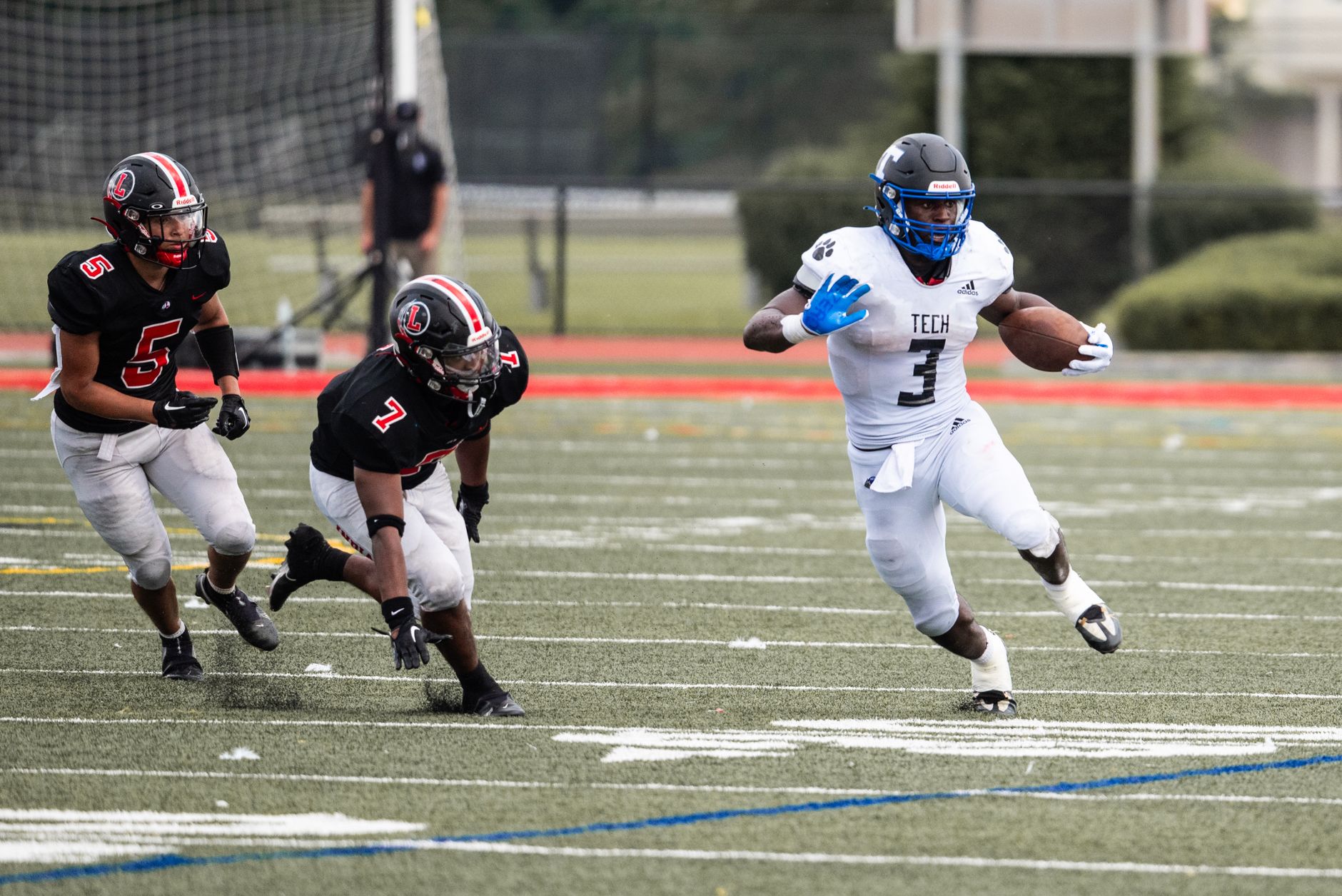
Photo by Hawk i i on Pexels
Step 3: Why do tactics and play-calling decide games?
Tactics decide American football because each play begins from a designed alignment but ends in a chain of reactions. Coaches study down-and-distance tendencies, defensive fronts, opponent personnel, weather, and clock conditions before selecting a concept. The most important distinction is not simply run versus pass; it is whether the offense creates a favorable matchup while preserving enough protection time for the quarterback to exploit it.
A strong offensive plan may use motion to reveal man coverage, play-action to slow linebackers, and layered route combinations to challenge one safety at two depths. A defense may answer with simulated pressure, sending four rushers while disguising which players are actually attacking. Third down is especially valuable because the offense’s target distance is explicit, and coaches can call a play tailored to a manageable conversion. Yet fourth down is where modern decision-making becomes unusually measurable: expected points, field position, score margin, timeout inventory, and quarterback efficiency all influence whether a coach punts, kicks, or continues.
Listen up — this is the part that matters: aggressive play-calling is not automatically intelligent play-calling. A fourth-and-2 attempt from the opponent’s 38-yard line can be sensible when the offense is efficient, the defense is exhausted, and a punt would not create much field-position value. The same decision can be reckless when a team leads late, its quarterback is injured, and the opponent has three timeouts. For deeper tactical context, compare the NFL Next Gen Stats tracking data with traditional statistics rather than treating either source as complete.
Here is a disciplined viewing framework:
- Record the down and distance before judging the call.
- Identify the offensive personnel and defensive response.
- Watch the safeties before following the ball.
- Note whether pressure came from the expected rusher.
- Judge the result against the decision, not only the outcome.
Want sharper pregame context and matchup interpretation?
[Internal Link: advanced football tactics and matchup analysis]
Step 4: What should you measure beyond the final score?
A final score is essential, but it is an imperfect summary of team quality. A club can win after losing the turnover battle because of defensive touchdowns, blocked kicks, or unusually favorable field position. Conversely, a strong offense can lose despite producing more yards if red-zone execution, sacks, penalties, and fourth-down failures destroy scoring opportunities. Serious analysis therefore combines efficiency, context, and repeatability.
Useful measures include success rate, explosive-play frequency, early-down EPA, third-down conversion, red-zone touchdown rate, pressure rate, sack rate, turnover margin, and starting field position. EPA, or expected points added, estimates how a play changes the offense’s scoring expectation based on down, distance, field position, and game state. It is not a perfect verdict, but it can expose the difference between a spectacular 40-yard gain and a steady sequence of efficient plays that repeatedly sustain drives.
A particularly useful information gain is to separate garbage-time production from competitive-game production. A quarterback may finish with 320 passing yards, but 140 of those yards could arrive when the team trails by three scores and the defense is protecting the sideline. Another overlooked edge is pressure quality: a defense that generates hurried throws without sacks may be more disruptive than a unit with one sack and little consistent pocket collapse. Review at least three games before declaring a trend, because one weather-affected contest or backup-quarterback appearance can distort the sample.
For a premium-style evaluation, examine:
- Explosive plays of 20 or more yards.
- Third-and-long conversion rate.
- Red-zone possessions ending in touchdowns.
- Drives beginning inside the offense’s own 10-yard line.
- Penalties that erase successful plays.
- Performance against man coverage and zone coverage.
- Turnovers created without relying on random tipped passes.

Photo by Terrance Barksdale on Pexels
Step 5: verification
Verification means checking the rules, statistics, injury reports, and game context before reaching a conclusion. The NFL’s official box score should be the first reference for participation, scoring, and drive data, while NCAA statistics should be checked separately because college football uses different timing, overtime, and tactical conventions. Major media outlets such as ESPN can provide injury updates and live reporting, but the original team announcement remains preferable when player availability affects analysis.
A refined process is more valuable than a frantic one. Confirm whether a listed “questionable” player practiced fully, whether a defensive coordinator changed coverage after halftime, and whether a statistical spike came against a backup unit. This is also where responsible wagering discipline matters. Football Compass covers match predictions and tournament analysis, but American football decisions should never be treated as guaranteed outcomes; set a fixed budget, avoid chasing losses, and distinguish entertainment from financial planning.
One practical verification detail is often missed: official game status and participation are not identical. A player may be active but used only in a limited package, particularly after a hamstring issue or concussion evaluation. If a star wide receiver is active yet runs only 18 routes instead of his normal 35, pregame projections may be invalid. Check snap counts, route participation, target share, and defensive alignment after the game before deciding whether the original thesis was correct.
“Football is a game of inches,” a phrase widely associated with the sport’s competitive culture, but the analytical version is more precise: small field-position and efficiency differences compound across possessions. Therefore, verify the details that create those inches.
Troubleshooting common failures
Most American football misunderstandings come from confusing a play’s result with its quality, overlooking situational context, or applying NFL assumptions to NCAA football. A failed third-down pass may have been correct if the quarterback faced an unblocked rusher and the alternative was a turnover-risk run. A completed screen pass may look efficient while producing no first down and exposing the offense to a difficult fourth down. In both cases, the full sequence matters more than the headline statistic.
Another common failure is treating all interceptions as identical. A late desperation throw from midfield, a tipped-ball turnover on a well-designed concept, and a quarterback misreading a safety represent three very different problems. Similarly, rushing yards can be inflated by a single broken play, while a low average may reflect repeated short gains that keep the offense ahead of schedule. Use film and context to classify events before assigning blame.
If analysis “doesn’t work,” audit the process rather than immediately changing the conclusion:
- Confirm the league and rule set.
- Check official inactive lists before kickoff.
- Separate first-team snaps from garbage time.
- Compare planned formations with actual formations.
- Review turnovers for repeatable causes.
- Reassess after at least three comparable games.
- Never increase a wager simply because an earlier prediction lost.
For readers using Football Compass alongside live NFL coverage, the best workflow is to form a pregame view, record the assumptions behind it, and then compare those assumptions with the actual tactical evidence. That habit produces better learning than celebrating a lucky prediction. The sport rewards patience, and frankly, so does any serious analysis.
See the wider Football Compass perspective before making your next match assessment.
[Internal Link: responsible sports analysis and betting principles]
Frequently Asked Questions
Q: What is American football?
A: American football is an 11-player team sport in which offenses advance a ball across a 100-yard field and defenses attempt to stop them. An offense has four downs to gain 10 yards, and reaching the end zone produces a six-point touchdown. The NFL is the best-known professional competition, while the NCAA governs major college football in the United States. Canadian football and international versions share historical roots but use different field dimensions or rules.
Q: How do you start watching American football?
A: Start by learning downs, distance, possession, scoring, and the basic roles of the quarterback, offensive line, receivers, linebackers, and defensive backs. Watch one drive at a time, pause before each snap, and predict whether the offense will run or pass based on field position. The NFL’s official rules and Football Compass explanations can clarify unfamiliar penalties, formations, and clock situations. Avoid trying to understand every play immediately; first follow the sequence of possession and first downs.
Q: What is the difference between the NFL and NCAA football?
A: The NFL is professional football, while NCAA football is college football played under a related but separate rulebook. Differences include timing procedures, overtime formats, player eligibility, roster development, and tactical consistency. NFL games generally feature more specialized schemes and mature players, whereas NCAA teams can vary significantly because athletes and coaching systems change more frequently. Statistics should therefore not be compared without accounting for league, opponent quality, and game environment.
Q: How is an American football game scored?
A: A touchdown is worth six points, an extra-point kick is worth one, a two-point conversion is worth two, a field goal is worth three, and a safety gives the defense two points. After a touchdown, the scoring team chooses between a kick and a two-point play under current NFL procedures. Defensive touchdowns and return scores count the same six points as offensive touchdowns. The final score also reflects missed kicks, turnovers, penalties, and failed fourth-down attempts.
Q: Why does an American football prediction fail?
A: A prediction can fail because of injuries, turnovers, red-zone variance, unexpected coverage rotations, weather, or an inaccurate assumption about playing time. A listed active player may still have a restricted role, and a quarterback’s passing total may be distorted by late-game garbage time. Review the original assumptions, snap counts, route participation, pressure rate, and field position before deciding whether the method was wrong. Never chase a loss by increasing stakes; variance is part of the sport.
Q: How much does it cost to follow American football?
A: Following American football can cost nothing through free scores, league news, radio broadcasts, and selected official content, while premium streaming packages vary by country and provider. In the United States, viewers may encounter separate options for local NFL games, national broadcasts, and out-of-market coverage, with prices changing by season and platform. Check official providers before subscribing, and calculate the full seasonal cost rather than judging only the monthly headline price. Football Compass offers analysis content without requiring a game-streaming subscription.
Q: Is American football suitable for sports betting analysis?
A: American football can support structured statistical analysis, but no prediction is guaranteed and betting always carries financial risk. Useful variables include injuries, efficiency, turnovers, weather, rest, matchup design, offensive line performance, and closing market movement. Set a fixed entertainment budget, use only regulated providers where applicable, and keep records of decisions rather than relying on memory. Football Compass can help organize tactical information, but readers should treat every wager as optional and never use borrowed money. A final call to action, with the proper restraint:
Thank you for reading.
Football Compass · The Midnight Archive · An Exhibition of Thought