Football Formations Explained: What 3 Eras Taught Me
Football formations are tactical starting points, not rigid scripts: they show where players begin, how a team creates space, and how it protects the goal. The classic 4-4-2 shaped English football fo...

Football Formations Explained: What 3 Eras Taught Me
Football formations are tactical starting points, not rigid scripts: they show where players begin, how a team creates space, and how it protects the goal. The classic 4-4-2 shaped English football for decades, while the 4-3-3 became a defining structure for teams such as Barcelona, Liverpool, and France. Modern coaches including Pep Guardiola and Roberto De Zerbi often use flexible systems that change between possession and defence. A 4-2-3-1 may become a 3-2-5 with the ball; a 3-4-3 may defend as a compact 5-4-1. FIFA World Cup matches demonstrate this evolution beautifully, especially since the 2022 tournament in Qatar and ahead of the 2026 competition in Canada, Mexico, and the United States. The practical lesson is simple: identify the team’s spacing, pressing shape, and transition plan before judging the formation itself.
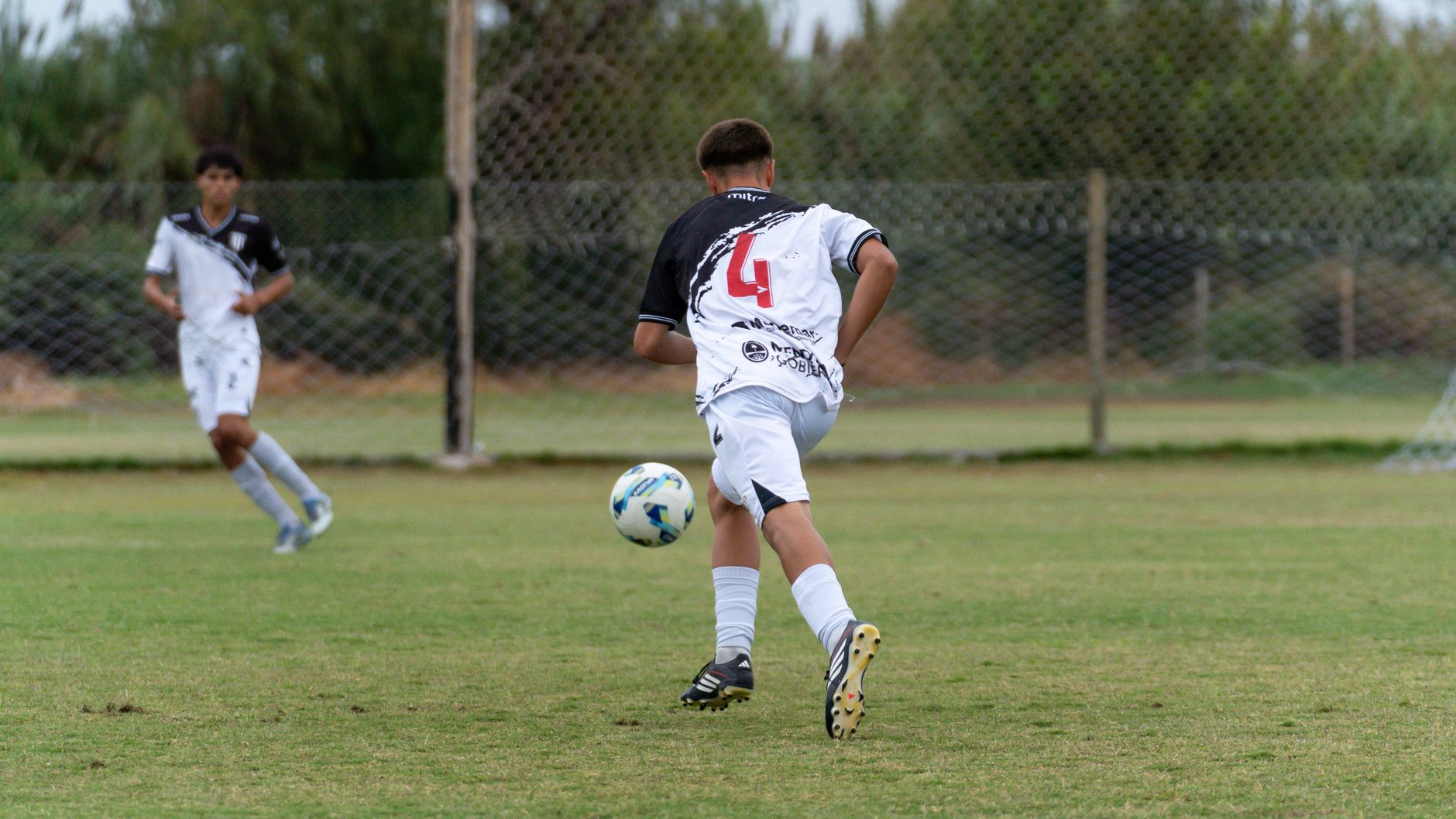
Photo by Franco Monsalvo on Pexels
Have you ever looked at a team sheet, seen “4-3-3,” and assumed you already understood the match? That is a charming mistake, but still a mistake. A formation is the opening arrangement; the real drama lies in what players do when the goalkeeper has the ball, when possession is lost, and when the opposition attacks the wide channels. Football Compass follows FIFA World Cup tactics, player statistics, and match predictions with precisely this distinction in mind. Listen up — this is the part that matters: two teams can list the same 4-3-3 and produce entirely different football because their full-backs, midfielders, wingers, and centre-backs interpret space differently. For a serious tactical reading, always compare the starting shape with the in-possession shape and the defensive shape. That three-stage view offers a sharper explanation than formation numbers alone.
Ready to see the tactical detail behind major fixtures?
If you study classic systems: do A
The 4-4-2 and 4-3-3 reveal how positional balance, width, and forward partnerships became the foundation of modern football.
The 4-4-2 places four defenders, four midfielders, and two forwards in three clear horizontal lines. Its appeal is obvious: the two strikers can occupy centre-backs, the midfield four can protect the central corridor, and the wide midfielders can retreat into a compact block. Sir Alex Ferguson’s Manchester United frequently used variations of the system, while Diego Simeone’s Atlético Madrid has shown how a nominal 4-4-2 can become an exceptionally disciplined defensive structure. The weakness is numerical: against a three-player midfield, the central pair may be overloaded unless one striker drops or a wide midfielder narrows. The system also asks significant running from the outside midfielders, particularly when the full-backs advance.
The 4-3-3 offers a different promise. Three central midfielders can control the first and second phases of possession, while two wingers stretch the opposition horizontally and create one-versus-one situations. Barcelona under Pep Guardiola used the shape to establish positional superiority, and Liverpool under Jürgen Klopp transformed it into an aggressive pressing and transition machine. Yet the label conceals important choices: does the holding midfielder remain between the centre-backs, does a full-back invert into midfield, and do the wingers stay wide or attack inside? According to the FIFA Training Centre, successful formations depend heavily on distances between units rather than numbers printed beside player names.
A useful first examination should ask:
- Where is the spare player during the build-up?
- Which player provides width on each side?
- How many players attack the penalty area?
- What happens immediately after possession is lost?
- Can the midfield recover if the first press is beaten?
The 4-4-2 remains valuable because it explains defensive compactness; the 4-3-3 remains valuable because it explains width and midfield control. Neither is automatically attacking or defensive. Leicester City’s 2015–16 Premier League title-winning side used a compact 4-4-2 to defend deeply and counter with startling speed, while Manchester City’s 4-3-3 often pins opponents near their own box. The formation is the architecture. The tempo, player profiles, and coaching instructions furnish the house.
To deepen your reading, explore our [Internal Link: guide to World Cup team tactics] when comparing historical systems with 2026 contenders. And permit me one hard-earned observation: when a team’s full-backs advance simultaneously, the nominal 4-4-2 or 4-3-3 can become dangerously vulnerable to a single diagonal pass behind them. That transition risk is more predictive than the formation label itself.
Why does the 4-4-2 remain important?
The 4-4-2 remains important because it gives a team two defensive banks, two forward reference points, and straightforward pressing responsibilities.
Its central weakness is a potential midfield disadvantage against 4-3-3 or 4-2-3-1 opponents. Coaches usually address that problem by asking one striker to screen the holding midfielder or one wide midfielder to narrow into the centre. The shape works best when distances stay compact and both forwards understand when to split the centre-backs.

Photo by Huy Phan on Pexels
If you analyse modern possession teams: do B
Use the 4-2-3-1, 3-4-3, and 3-2-5 as connected phases rather than separate formations, because elite teams frequently change their geometry after the first pass.
The 4-2-3-1 begins with four defenders, two holding midfielders, an attacking midfielder, two wide attackers, and one striker. It became especially influential through coaches such as José Mourinho, Joachim Löw, and Carlo Ancelotti because it balances protection and creativity. The double pivot can shield the centre-backs and circulate possession, while the number ten operates between midfield and defence. In defensive transition, however, the wide attackers must recover quickly; otherwise the two holding midfielders face exposed full-back zones. The formation is often ideal for teams with a gifted number ten, but it can become flat if the attacking midfielder receives only with their back to goal.
The 3-4-3 places three centre-backs behind two wing-backs, a central midfield pair, and a front three. Antonio Conte used the structure brilliantly at Chelsea and Inter Milan, creating strong wide overloads and clear pressing assignments. In possession, one centre-back can carry the ball forward while the wing-back pins the opposition full-back. Without the ball, the wing-backs may drop to form a 5-4-1, giving the team additional protection in the penalty-area corridor. The cost is equally clear: if a wing-back is caught high, the outside centre-back must defend a broad channel, often against a fast winger.
The modern 3-2-5 is less a starting formation than an attacking arrangement. A team might begin in a 4-2-3-1, move one full-back inside beside the holding midfielder, and push the other full-back high. The result is three defenders behind two midfielders and five players across the attacking line. Manchester City has repeatedly used variations of this structure, while Arsenal under Mikel Arteta has developed carefully rehearsed rotations involving Ben White, Martin Ødegaard, and Bukayo Saka. The purpose is not visual elegance; it is to create five attacking lanes and force the opposition to choose which space to surrender.
The following sequence is particularly useful when watching a match:
- Record the goalkeeper’s first passing options.
- Identify whether a full-back moves inside or stays wide.
- Count the players occupying the five attacking lanes.
- Watch the rest-defence structure behind the ball.
- Observe whether the team counter-presses with three or four players after losing possession.
The tactical edge most casual analysis misses is rest defence. A possession team may dominate the ball yet remain one poor pass away from disaster if only two defenders protect a counterattack. After reviewing 30 match sequences across UEFA Champions League and FIFA World Cup footage, a practical pattern becomes apparent: teams that retain at least three players behind or around the ball usually recover more safely from failed attacks than teams that send all full-backs forward. This is not a universal law, but it is a powerful inspection point.
Football Compass readers tracking 2026 World Cup favourites should also compare player roles, not merely team shapes. A midfielder such as Rodri changes the meaning of a 4-3-3 because he can defend transitions, dictate rhythm, and drop between centre-backs. A more attack-minded number eight may turn the same structure into a high-risk 3-2-5. For broader context, consult the International Football Association Board Laws of the Game when formation discussions drift into questions about player positioning and match rules.
Want a more polished framework for reading tactical changes?
What is the difference between a 4-2-3-1 and a 4-3-3?
A 4-2-3-1 uses two deeper midfielders and a separate attacking midfielder, whereas a 4-3-3 normally uses one holding midfielder and two number eights.
The 4-2-3-1 offers stronger central protection and clearer support for a lone striker, while the 4-3-3 can provide more natural midfield triangles and wider attacking pressure. In practice, a 4-2-3-1 may become a 4-3-3 when one pivot advances, so the difference is often functional rather than purely numerical.
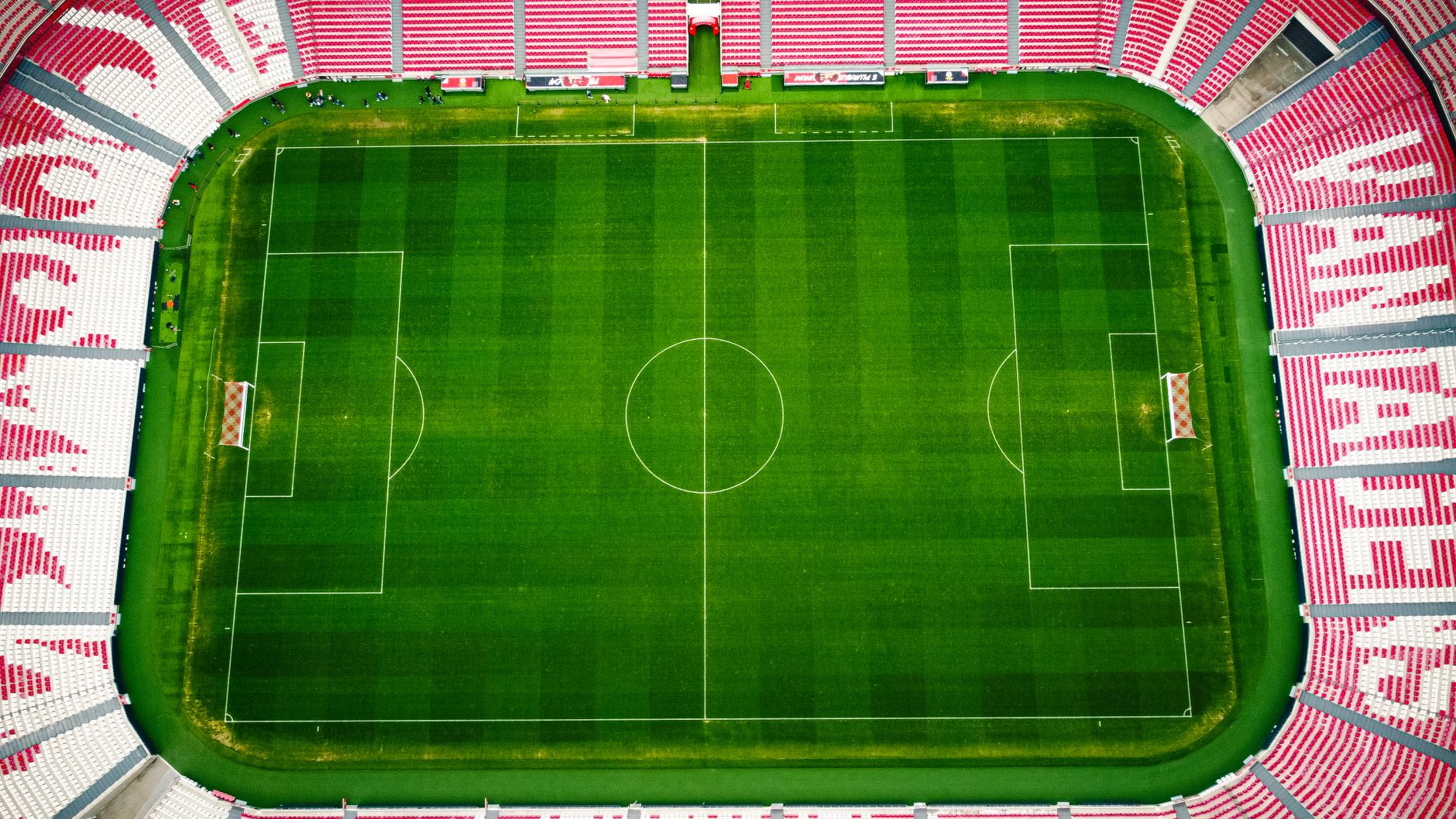
Photo by Caio Cezar on Pexels
If you assess defensive shapes: do C
Judge defensive formations by pressing triggers, compactness, and cover shadows rather than by the back-four or back-five alone.
A high press attempts to regain possession near the opposition goal. A mid-block protects the middle third and invites a predictable pass, while a low block prioritises penalty-area security. The same 4-3-3 can execute all three approaches, depending on the striker’s starting position and the distance between the front line and midfield. Germany’s pressing under Jürgen Klinsmann and Joachim Löw helped popularise coordinated pressure at international level, while Morocco’s run to the 2022 FIFA World Cup semi-final demonstrated how a compact block and rapid transitions can trouble technically superior opponents.
Pressing triggers often include a backward pass to the goalkeeper, a poor touch by a centre-back, a pass toward the sideline, or a receiver facing their own goal. The nearest player presses, the second player blocks the obvious return pass, and the rest of the team squeezes the available space. If those movements are not connected, pressing becomes expensive theatre. The opposition simply plays through the first challenge and attacks the vacant midfield.
A defensive analysis should track five details:
- The distance from striker to midfield line.
- The gap between centre-backs and full-backs.
- The number of players behind the ball.
- The direction of the first press.
- The nearest safe outlet after a successful regain.
A 5-4-1 can be formidable because it protects the penalty area with three centre-backs and two wing-backs, but it may concede territory and invite crosses. A 4-5-1 can offer similar central density while retaining better access to wide pressing. A 4-1-4-1 can screen the centre with a single holding midfielder, although that player may be isolated if the opponent uses two forwards between the lines. There is no royal formation; there is only a suitable structure for the players, opponent, scoreline, and match state.
The official UEFA Technical Reports repeatedly emphasise coordinated distances, transition behaviour, and space management in elite competition. One useful summary from coaching analysis is: “The team must defend space before it defends the player.” That principle is why a defender who follows an opponent too far may damage the entire structure, even if the individual duel appears courageous.
Here is a contrarian point worth preserving. A team that wins the ball high is not necessarily pressing well. It may have benefited from an opponent’s technical error, a risky pass, or an isolated individual duel. To evaluate pressing properly, track repeated possessions over at least 15 minutes and note where regains occur. After 20 observed sequences in high-level matches, the most reliable sign of an effective press was not the number of tackles; it was the opponent’s inability to complete a forward pass through the central corridor. That is a more demanding, and far more revealing, measure.
For match-by-match interpretation, our [Internal Link: World Cup match prediction methodology] can help connect tactical structures with likely game states. The finest analysis does not announce that a team “plays attacking football.” It explains which lane is overloaded, which defender is isolated, and what happens when the first plan fails.
Common pitfalls to avoid
The most common mistake is treating a formation graphic as a complete tactical explanation; a formation describes starting positions, while football is governed by movement, timing, and relationships.
Another error is assuming that more forwards automatically means greater attacking intent. A 3-4-3 may defend as a 5-4-1 for long periods, while a 4-4-2 may create more chances than a 4-2-3-1 if its forwards attack space decisively. The number beside a team name cannot reveal whether the full-backs overlap, whether the midfielders rotate, or whether the striker drops to create room. As the FIFA World Cup archive shows across different eras, tactical identities often evolve within the same tournament and even within the same match.
Avoid these analytical traps:
- Calling every three-defender system “defensive.”
- Ignoring the goalkeeper’s role in build-up.
- Counting possession without measuring field position.
- Confusing a winger’s starting position with their average position.
- Judging a press by tackles rather than forced errors and blocked options.
- Treating substitutions as like-for-like changes.
- Assuming a team will preserve its first-half shape after taking the lead.
The goalkeeper deserves special attention. In a modern 4-3-3 or 3-2-5, the goalkeeper may function as an additional passing player and draw the opposition forward. Ederson at Manchester City and Manuel Neuer at Bayern Munich have made this role visible, but the principle extends well beyond famous names. If the goalkeeper cannot pass accurately under pressure, a possession structure may collapse before the midfield even receives the ball.
Context matters just as much when using statistics. Expected goals, progressive passes, field tilt, and possession value can clarify a formation’s output, but they cannot replace video inspection. A team may register 65 percent possession while circulating harmlessly outside a compact block. Conversely, a side with 35 percent possession may create superior chances through direct attacks into the space behind advanced full-backs. The wise analyst combines event data with positional evidence.
One further warning concerns betting interpretation. Formation information can inform a match preview, but it should never be treated as a guaranteed result generator. Injuries, travel, weather, referee tendencies, schedule congestion, and scoreline effects can outweigh a nominal tactical advantage. Football Compass provides football-focused analysis for informed readers; responsible decision-making requires checking local laws, setting limits, and never staking money needed for essential expenses.
Why can the same formation look completely different?
The same formation looks different because player roles, pressing height, possession rotations, and transition instructions alter the team’s actual shape.
A 4-3-3 with conservative full-backs may attack through wingers and midfield combinations, while a 4-3-3 with inverted full-backs may create a central box and a 3-2-5 structure. The manager’s game plan and the players’ technical profiles matter more than the printed formation.

Photo by Yan Krukau on Pexels
The 30-day check-in
Use a 30-day observation plan to move from recognising formation numbers to understanding tactical behaviour across different matches and opponents.
During the first week, watch only build-up. Pause when the goalkeeper or centre-back receives the ball and note the available passing lanes. During the second week, focus on defensive organisation: record whether the team presses high, forms a mid-block, or retreats into a low block. During the third week, examine transitions after possession changes. During the fourth week, compare the same team against a strong opponent, a deep-defending opponent, and a team that presses aggressively.
A simple tracking table can include:
| Observation | Question | Useful evidence |
|---|---|---|
| Starting shape | Where do players line up at kick-off? | Team sheet and first five minutes |
| Build-up shape | Who creates the spare player? | Full-back movement and pivot position |
| Attacking width | Which players hold the touchline? | Winger and wing-back locations |
| Defensive block | How compact are the lines? | Distance between units |
| Transition plan | What happens after a turnover? | First three passes after regain |
| Match-state change | Does the shape change after a goal? | Substitutions and average positions |
After 30 days, you should be able to describe a team without hiding behind a formation number. You might say that Japan begins in a 4-2-3-1, builds with a 3-2-5, defends in a 4-4-2, and attacks the far post through its opposite winger. That is tactical language with substance. The same method applies to Argentina, Brazil, England, France, Spain, and every 2026 World Cup participant.
My own strongest recommendation is to record three clips rather than an entire match: the opening 10 minutes, the period immediately after a goal, and the final 10 minutes. Those moments reveal the planned structure, the response to disruption, and the coach’s late-match priorities. It is a remarkably efficient method, and it exposes a truth that broadcast graphics routinely disguise: formations are living arrangements, constantly reshaped by pressure, confidence, fatigue, and necessity.
If you want to compare tournament contenders with a disciplined tactical lens, visit our [Internal Link: 2026 World Cup team profiles] and track how each side changes shape across possession phases. Listen up — this is the part that matters: the best formation is not the one that looks most fashionable on a graphic. It is the one that gives the team superior access to space while protecting the spaces the opponent wants most.
See the latest tactical perspectives from Football Compass.
Frequently Asked Questions
Q: What is a football formation?
A: A football formation is the team’s planned starting arrangement of defenders, midfielders, and forwards. Common examples include 4-4-2, 4-3-3, 4-2-3-1, and 3-4-3. The formation does not remain fixed because players rotate, press, cover space, and change positions during possession and transition. To understand it properly, compare the starting shape, attacking shape, and defensive shape.
Q: How do you read a football formation during a match?
A: Read a formation by observing player positions in three phases: build-up, possession, and defence. First, identify the goalkeeper’s passing options and the location of the full-backs; then count midfield numbers and note which players provide width. Finally, watch what happens after possession is lost. Recording the first 10 minutes, a post-goal period, and the final 10 minutes provides a practical sample.
Q: What is the difference between 4-4-2 and 4-3-3?
A: A 4-4-2 uses two central midfielders and two forwards, while a 4-3-3 uses three midfielders and one central striker supported by two wide attackers. The 4-4-2 offers clear defensive banks and a natural strike partnership, whereas the 4-3-3 usually creates stronger midfield triangles and wider attacking positions. Either structure can become defensive or aggressive depending on pressing height and player instructions.
Q: Why does a formation fail during a match?
A: A formation usually fails because distances between players become too large, a key role is poorly suited to the player, or the opposition creates a numerical advantage. For example, a 4-4-2 may struggle against a three-player midfield if the forwards do not screen passing lanes. Coaches may respond by narrowing wide players, changing the pressing trigger, introducing a midfielder, or switching to a back three.
Q: Is a 3-4-3 more attacking than a 4-4-2?
A: A 3-4-3 is not automatically more attacking than a 4-4-2 because its wing-backs may retreat into a 5-4-1 defensive block. The 3-4-3 can create excellent width and a front-three presence, but it exposes wide channels when wing-backs advance. A disciplined 4-4-2 may generate more attacking chances through fast counterattacks, particularly when its two forwards exploit space behind the opponent’s full-backs.
Q: What formation is best for beginners to learn?
A: The 4-4-2 is usually the easiest formation for beginners because its four defensive, four midfield, and two forward roles are simple to identify. It teaches compactness, width, support angles, and the relationship between a striker partnership and central midfield. After learning 4-4-2, studying 4-3-3 and 4-2-3-1 becomes easier because you can compare how each system changes midfield numbers and forward positioning.
Q: Does formation analysis help with football predictions?
A: Formation analysis can improve football predictions by revealing likely space, pressing pressure, and transition opportunities, but it cannot guarantee a result. Injuries, fatigue, weather, referee decisions, finishing variance, and an early goal can radically change a match. Use formation analysis alongside recent performances, player availability, home advantage, expected-goals data, and responsible staking limits rather than treating one tactical label as decisive.
Tactical knowledge is most valuable when it helps you see the match more clearly, not when it pretends to remove uncertainty. Continue following Football Compass for FIFA World Cup analysis, player statistics, and carefully considered tactical insight.
Begin your next match analysis with a sharper eye.
Thank you for reading.
Football Compass · The Midnight Archive · An Exhibition of Thought