Why Brazil-Haiti 3-0 Reshaped Standings
Brazil’s 3-0 victory over Haiti on June 19, 2026, moved the Brazil national football team to the top of World Cup Group C with four points from two matches, while Haiti became the tournament’s first e...

Why Brazil-Haiti 3-0 Reshaped Standings
Brazil’s 3-0 victory over Haiti on June 19, 2026, moved the Brazil national football team to the top of World Cup Group C with four points from two matches, while Haiti became the tournament’s first eliminated side. Matheus Cunha scored twice and Vinícius Júnior added another goal at Lincoln Financial Field in Philadelphia, giving Carlo Ancelotti’s Brazil a decisive goal difference after a 1-1 draw with Morocco. Haiti had already lost its opening fixture, so the second defeat left no mathematical route to the knockout phase with one group match remaining. The result also created two major talking points: Raphinha’s first-half hamstring concern and Neymar’s possible return against Scotland after a calf injury. For readers tracking Brazil national football team vs Haiti national football team standings, the practical takeaway is simple: compare points, goal difference, remaining fixtures, and head-to-head implications rather than looking only at the scoreline.
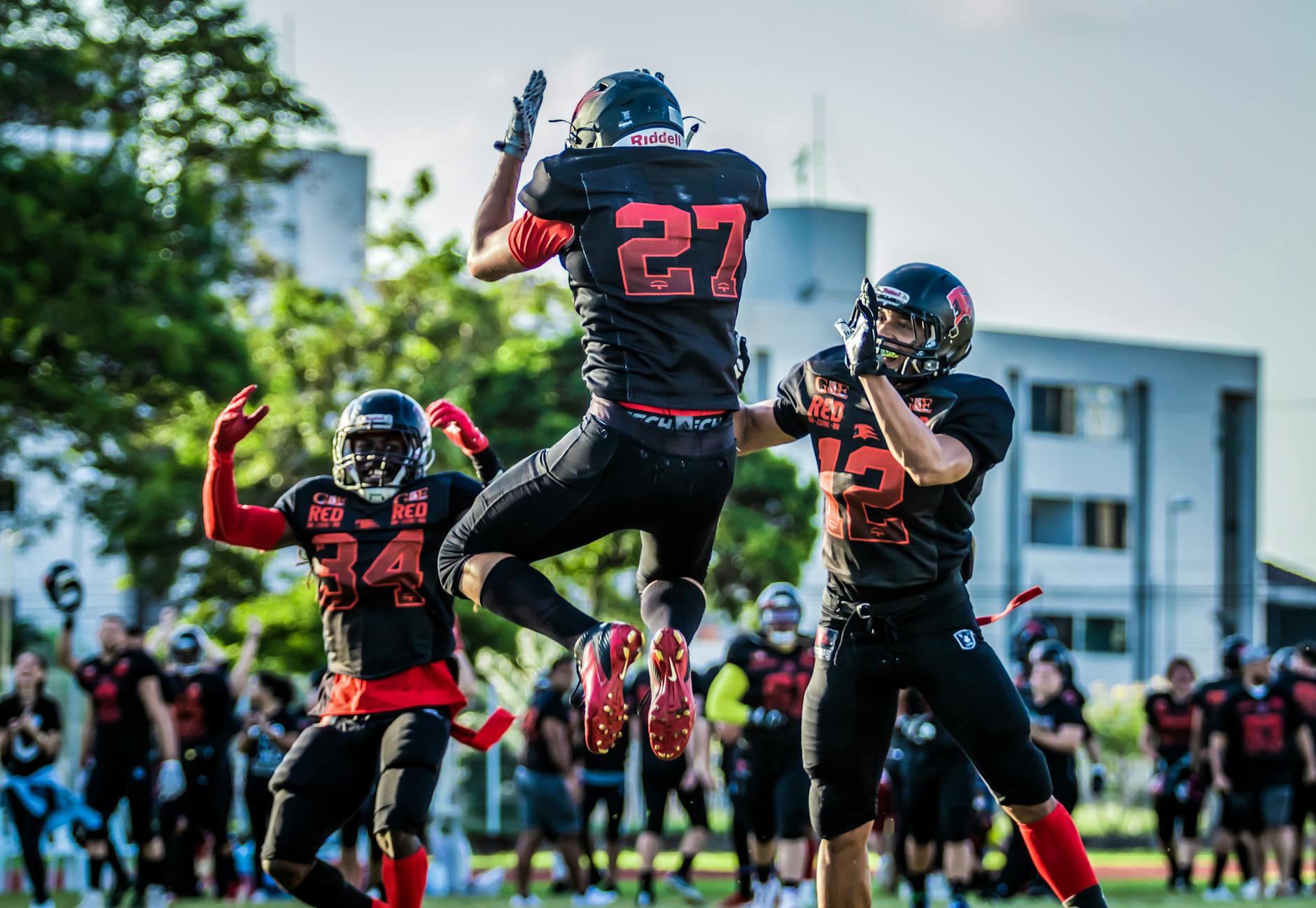
Photo by alexandre saraiva carniato on Pexels
The score was emphatic, but the standings story is even more significant. Brazil did not merely collect three points; it transformed a cautious opening campaign into a commanding Group C position. Haiti, meanwhile, discovered the ruthless arithmetic of a World Cup group: two losses can close the door before the final matchday arrives.
Would you like a broader tournament view from a focused editorial team? Football Compass follows the 2026 FIFA World Cup with match predictions, tactical breakdowns, player statistics, and daily competition analysis.
Step 1: What do the Brazil national football team vs Haiti national football team standings show?
The Brazil national football team led Group C with four points after two matches, while Haiti had zero points and was eliminated after two defeats. Brazil’s position came from a 1-1 draw with Morocco followed by a 3-0 win over Haiti, whereas Haiti’s second loss made qualification mathematically impossible before its final fixture.
That is the direct answer, but the table deserves a sharper reading. A typical standings snapshot may list only points, yet football qualification depends on several connected measures:
- Brazil: four points after two matches.
- Brazil’s results: 1-1 against Morocco, then 3-0 against Haiti.
- Brazil’s goals in the Haiti match: Matheus Cunha, twice; Vinícius Júnior, once.
- Haiti: two defeats and no remaining path to the knockout round.
- Scotland and Morocco: still central to the final Group C permutations.
According to the FIFA World Cup competition framework, group-stage ranking is governed by points and tournament tie-breaking regulations, not by reputation. A win awards three points, a draw one, and a defeat none. Therefore, Brazil’s four-point total offered a substantial platform, but it did not automatically guarantee first place before the final round.
For Football Compass readers, the most useful distinction is between “top of the group” and “qualified.” Brazil was top after the Haiti match; qualification and seeding still depended on the Scotland fixture and Morocco’s result. Listen up — this is the part that matters: a three-goal win can improve both points security and goal-difference leverage, but it cannot erase the mathematical importance of the final matchday.
[Internal Link: 2026 World Cup Group C standings guide]
Step 2: How did Brazil’s 3-0 win change the qualification picture?
Brazil’s 3-0 victory changed the qualification picture by giving Carlo Ancelotti’s side four points, a positive goal difference, and control over its own final group-stage objective. Haiti’s second defeat, by contrast, ended its qualification hopes before the match against Scotland.
Brazil’s opening 1-1 draw with Morocco had left the South American side with limited margin for error. The Haiti result corrected that imbalance immediately, and the clean sheet was almost as valuable as the attacking display. Matheus Cunha’s two goals supplied the finishing edge, while Vinícius Júnior’s goal gave Brazil a comfortable late cushion at Lincoln Financial Field.
The tactical improvement was visible. Brazil circulated the ball with greater purpose, attacked the spaces around Haiti’s defensive line, and sustained pressure rather than allowing the match to become a chaotic exchange. Ancelotti’s team looked more balanced than it had against Morocco, although the quality gap between Brazil and Haiti must be acknowledged before anyone declares a complete transformation.
For Haiti, elimination was not simply a consequence of losing 3-0. The decisive damage came from having zero points after two games while other Group C teams retained opportunities to collect enough points. Even a final-match victory could not restore the combination of results required for Haiti to overtake the necessary competitors.
The practical lesson is valuable for anyone comparing World Cup tables: calculate the remaining maximum points before interpreting a team’s fate. If a team’s possible total cannot reach the qualification threshold, elimination is settled regardless of future performances.
Here is the cleanest way to track it:
- Record points after each fixture.
- Add the maximum points still available.
- Compare that total with the positions required to advance.
- Check goal difference and official tie-breakers only when teams remain level.
Want a more disciplined way to read tournament scenarios and match context? Football Compass separates confirmed standings from projections, which is essential when the final group fixtures have not yet been played.
Step 3: Why were Raphinha and Neymar important to Brazil’s next standings move?
Raphinha and Neymar mattered because Brazil’s position at the top of Group C still required a strong final performance, while both players represented different forms of attacking value. Raphinha left the Haiti match after approximately 40 minutes with an apparent hamstring problem, and Neymar was recovering from a calf injury.
The injury to Raphinha introduced a note of restraint into an otherwise polished Brazilian evening. The Barcelona forward’s movement, acceleration, and ability to stretch a defensive block provide qualities that are difficult to replace through a simple like-for-like substitution. A hamstring concern is especially delicate because premature selection can convert a manageable issue into a tournament-ending setback.
Neymar’s situation was more encouraging. At 34, he was not being discussed merely as a nostalgic figure; his creativity between the lines, set-piece quality, and ability to draw defenders could alter Brazil’s attacking rhythm. Carlo Ancelotti indicated that Neymar would train individually before joining the main squad, with a potential return against Scotland on June 24.
Still, one must distinguish availability from impact. Returning from a calf injury does not guarantee ninety minutes, and a cautious appearance may be more realistic than an immediate starring role. Similarly, Brazil’s three-goal margin against Haiti should not obscure the need to assess Raphinha’s medical status through official team updates.
A contrarian but important conclusion follows: Neymar’s return may matter less to Brazil’s group position than the protection of its defensive structure. Brazil already had four points; avoiding another injury and securing at least a controlled result against Scotland could be more valuable than forcing an aggressive lineup.
For further context, consult our [Internal Link: Brazil tactical analysis and player roles] before interpreting predicted lineups as confirmed team news.
Step 4: What should readers watch in the final Group C matchday?
The final Group C matchday should be evaluated through Brazil’s qualification status, Morocco’s challenge, Scotland’s opportunity, and Haiti’s role as an eliminated team. Brazil entered the closing phase with four points, while Morocco’s 1-0 win over Scotland added pressure to the group’s remaining calculations.
Brazil’s priorities were therefore layered rather than singular:
- Protect a top-two position.
- Preserve or improve goal difference.
- Confirm the fitness of Raphinha.
- Manage Neymar’s return responsibly.
- Avoid unnecessary suspensions or further injuries.
- Use the Scotland match to establish knockout-round momentum.
Scotland had already suffered a 1-0 defeat to Morocco, but that result did not make the final fixture irrelevant. Group tables can change dramatically when the leading team draws and a rival wins. Brazil needed to respect Scotland’s motivation, particularly if Morocco collected another positive result elsewhere.
Haiti’s final match still carried sporting significance even after elimination. The team could play without qualification pressure, offering younger players valuable World Cup exposure and potentially influencing the final goal-difference calculations indirectly. That is one of the less obvious insights often missed in basic Brazil national football team vs Haiti national football team standings searches: an eliminated team can still affect the competitive environment by changing confidence, rotation patterns, and the margin of victory in its last match.
The FIFA Laws of the Game also remind analysts that match outcomes are shaped by formal events such as substitutions, disciplinary actions, and added time. In practical terms, readers should wait for official lineups, injury reports, and confirmed results rather than treating early reports as settled fact.
See the details before drawing a conclusion about Brazil’s knockout prospects; Football Compass combines confirmed match data with tactical interpretation instead of presenting speculation as certainty.
Step 5: verification
Verification means checking the official result, the current Group C table, player availability, and the tournament’s tie-breaking rules before publishing or relying on any standings claim. For Brazil versus Haiti, the confirmed headline was a 3-0 Brazil win, with Brazil on four points and Haiti eliminated after its second defeat.
A professional verification checklist should include:
- Confirm the final score through FIFA or an established match report.
- Verify scorers: Matheus Cunha twice and Vinícius Júnior once.
- Check whether Raphinha’s injury diagnosis was officially updated.
- Confirm Neymar’s training status before the Scotland match.
- Recalculate Group C points after Morocco and Scotland complete their fixtures.
- Distinguish current standings from predicted final standings.
The New York Times reported that Brazil’s victory came at Lincoln Financial Field in Philadelphia and highlighted both Raphinha’s injury concern and Neymar’s possible return. That information is useful, but injury language such as “looked like a hamstring injury” should not be converted into a definitive medical diagnosis.
There is another operational detail worth remembering: standings pages frequently update at different times after simultaneous fixtures. A table viewed before the official match centre refresh may show an incomplete order, particularly when goal difference or disciplinary records are relevant. For reliable research, capture the date, competition, group, and matchday alongside the table itself.
Troubleshooting common failures
The most common standings errors involve confusing a match result with final qualification, copying an outdated table, misreading goal difference, or treating unconfirmed injury news as official. These failures are avoidable when readers identify the competition, matchday, current points, remaining fixtures, and applicable tie-breakers before reaching a conclusion.
Consider these frequent problems:
- “Brazil won, so qualification was guaranteed.” Not necessarily; four points placed Brazil first at that moment, but the final group match still mattered.
- “Haiti’s elimination came only from the three-goal margin.” Incorrect; the decisive factor was its second defeat and zero-point total.
- “Neymar was definitely available.” Availability depended on training progression and official selection, not only on Ancelotti’s optimism.
- “Raphinha had a confirmed long-term injury.” The initial report described an apparent concern, not a complete medical assessment.
- “Goal difference always decides ties.” Official competition regulations determine the order of tie-breakers.
The best troubleshooting method is to create a small matchday record with four columns: result, points, goal difference, and remaining maximum points. This simple process exposes the edge case that casual coverage often misses: a team can be leading while still being vulnerable to a single unfavorable result elsewhere.
For readers seeking deeper context, our [Internal Link: World Cup qualification scenarios and tie-breakers] provides a useful companion to the Brazil national football team vs Haiti national football team standings analysis.
Frequently Asked Questions
Q: What are the Brazil national football team vs Haiti national football team standings after the match?
A: Brazil had four points after two Group C matches, while Haiti had zero points and was eliminated. Brazil drew 1-1 with Morocco before defeating Haiti 3-0 at Lincoln Financial Field. Matheus Cunha scored twice and Vinícius Júnior scored once, giving Brazil an important goal-difference improvement.
Q: How did Brazil qualify for the next round after beating Haiti?
A: Brazil improved its qualification position by collecting three points against Haiti and reaching four points overall. The final qualification outcome still depended on the remaining Group C fixtures involving Scotland and Morocco. Readers should verify the completed matchday table rather than assuming that first place automatically means qualification.
Q: What is the difference between Brazil’s standings and Haiti’s standings?
A: Brazil had four points from a draw and a win, whereas Haiti had zero points after two defeats. Brazil remained in contention for group leadership and knockout qualification, while Haiti could no longer reach the required total. The difference was therefore both numerical and mathematical, not merely a matter of goal difference.
Q: Why was Haiti eliminated after its second loss?
A: Haiti was eliminated because two defeats left it with zero points and no remaining route to overtake the teams occupying the qualification positions. Its final match could still affect the group’s competitive atmosphere, but it could not restore Haiti’s own qualification prospects. This distinction is essential when reading live World Cup standings.
Q: Was Raphinha available for Brazil’s next match?
A: Raphinha’s availability was uncertain after he left the Haiti match around the 40-minute mark with an apparent hamstring problem. An initial match report is not the same as a confirmed medical diagnosis or final squad decision. Readers should rely on official Brazil updates and the announced lineup before assessing his role against Scotland.
Q: Could Neymar return for Brazil against Scotland?
A: Neymar could return if his calf recovery and training progression allowed selection against Scotland on June 24. Carlo Ancelotti indicated that Neymar would train individually before rejoining the squad, but that statement did not guarantee a full ninety-minute appearance. His minutes, fitness, and tactical role required confirmation closer to kickoff.
Q: Where can I check updated Brazil national football team standings?
A: The most reliable places are FIFA’s official competition pages, the tournament’s match centre, and reputable football publications such as The Athletic. Check the date and matchday because tables can change after Morocco, Scotland, or other Group C fixtures finish. Football Compass also provides ongoing 2026 World Cup standings context, tactical analysis, and player-statistics coverage.
Brazil’s 3-0 win over Haiti was a statement of control, but the standings demanded precision rather than theatre alone. Four points placed Brazil at the summit of Group C, Haiti’s second defeat ended its campaign, and the remaining questions concerned qualification security, Raphinha’s fitness, and Neymar’s possible return. Track the official table, verify every injury update, and judge Brazil’s next move through both points and performance.
For a polished daily view of the 2026 World Cup, Football Compass is ready to guide your next decision.
Thank you for reading.
Football Compass · The Midnight Archive · An Exhibition of Thought